

Uncategorized @vi
Top-Rated Lenders Offering a Personal Loan With Collateral in 2026

Top-Rated Lenders Offering a Personal Loan With Collateral in 2026
Last updated: 2026-10-17
Stepping into a meeting about secured borrowing often feels like navigating a dense mist without a compass. When you pledge a tangible asset—perhaps your vehicle or a dedicated savings fund—as security, you are making a heavyweight commitment. This strategy frequently serves as a lifeline for those seeking reduced interest costs or a way to secure approval after conventional banks have closed their doors.
By offering a guarantee through collateral, you signal to the institution that their exposure to loss is minimal. This often unlocks superior repayment conditions and much larger borrowing ceilings than unsecured options can provide. In essence, you are swapping a piece of your net worth for much more advantageous lending terms.
Selecting the right institution requires looking beneath the surface-level advertisements. You must carefully balance your immediate need for liquidity against the potential danger of forfeiting your assets. A sudden mechanical breakdown in a pledged car or a volatile downturn in equity markets can shift your financial math in the blink of an eye.
The following breakdown showcases the premier contenders in the 2026 landscape. Our analysis prioritized organizations that provide both reliability and rapid processing for various unique monetary requirements.
- JetzLoan
- Best Egg
- OneMain Financial
- Freedom First Credit Union
- Balance Credit
- Synchrony
Our Selection Process Detailed
Our researchers set out to pinpoint financial institutions that truly leverage assets to bolster a client’s standing. We scrutinized the diverse ways these companies approach varying credit profiles. This meant analyzing options for those with flawless histories and those currently treading water through difficult times.
The size of the loan isn’t the only factor that moves the needle. How fast the cash hits your pocket is just as vital. If a company drags its feet with mountains of paperwork for weeks, they aren’t providing much relief when an urgent bill arrives.
We prioritized how quickly funds are released, the ceiling on total borrowing, and the simplicity of the signup process. We also investigated whether a formal inquiry would cause a dip in a consumer’s rating during that initial step.
Being able to scout interest rates without hurting your standing is a game-changer. We hunted for companies that utilize “soft pulls” to provide preliminary estimates. This method lets you browse various options without leaving a messy trail of inquiries behind.
| Institution | Highest Borrowing Limit | Time to Receive Funds | Initial Credit Effect |
|---|---|---|---|
| JetzLoan | $35,000 | Within 24 hours at most | No hard credit pull |
| Best Egg | $50,000 | Check their website | Check their website |
| OneMain Financial | $30,000 | Often within an hour | No credit score impact |
| Freedom First Credit Union | Check their website | Check their website | Check their website |
| Balance Credit | $4,000 | The following business day | No impact on credit score |
| Synchrony | Check their website | Check their website | Check their website |
Premier Lending Options for Secured Loans
1. JetzLoan
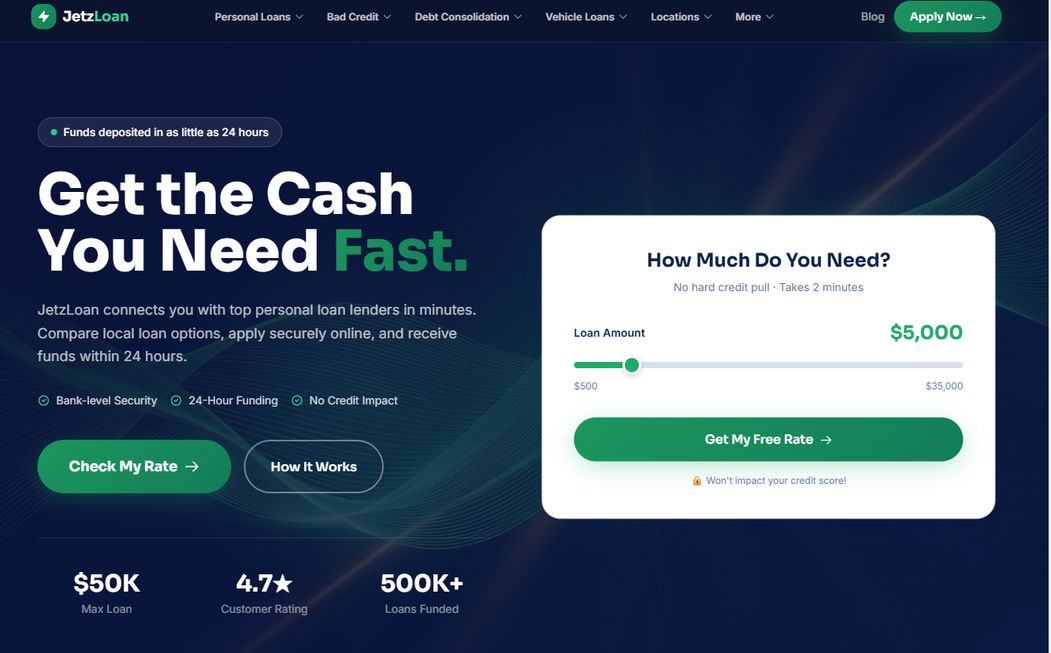
Think of JetzLoan as a rapid financial conduit for individuals who cannot afford to wait around for bank approvals. They act as a matchmaker, pairing you with elite lenders in a matter of moments. It is a lifesaver when life throws a curveball and you need cash immediately.
If a sudden medical emergency or a broken water heater leaves you scrambling, you’ll appreciate their speed. They can have funds landing in your bank account in as little as 24 hours. (jetzloan.com)
For anyone who treats their credit score like a precious heirloom, this is a breath of fresh air. You can peek at your potential rates through a soft inquiry that won’t ding your rating. This “no-risk” exploration lets you shop around with total peace of mind.
This feature is a game-changer if you are currently shopping for a car or a mortgage. You simply cannot afford any sudden drops in your score during such critical windows. Their entire model is built on digital efficiency and absolute transparency.
Pros:
- Cash arrives in as little as 24 hours.
- Initial rate checks do not impact credit scores.
- Maximum borrowing capacity of $35,000.
Cons:
- Functions as a middleman rather than a direct lender.
2. Best Egg
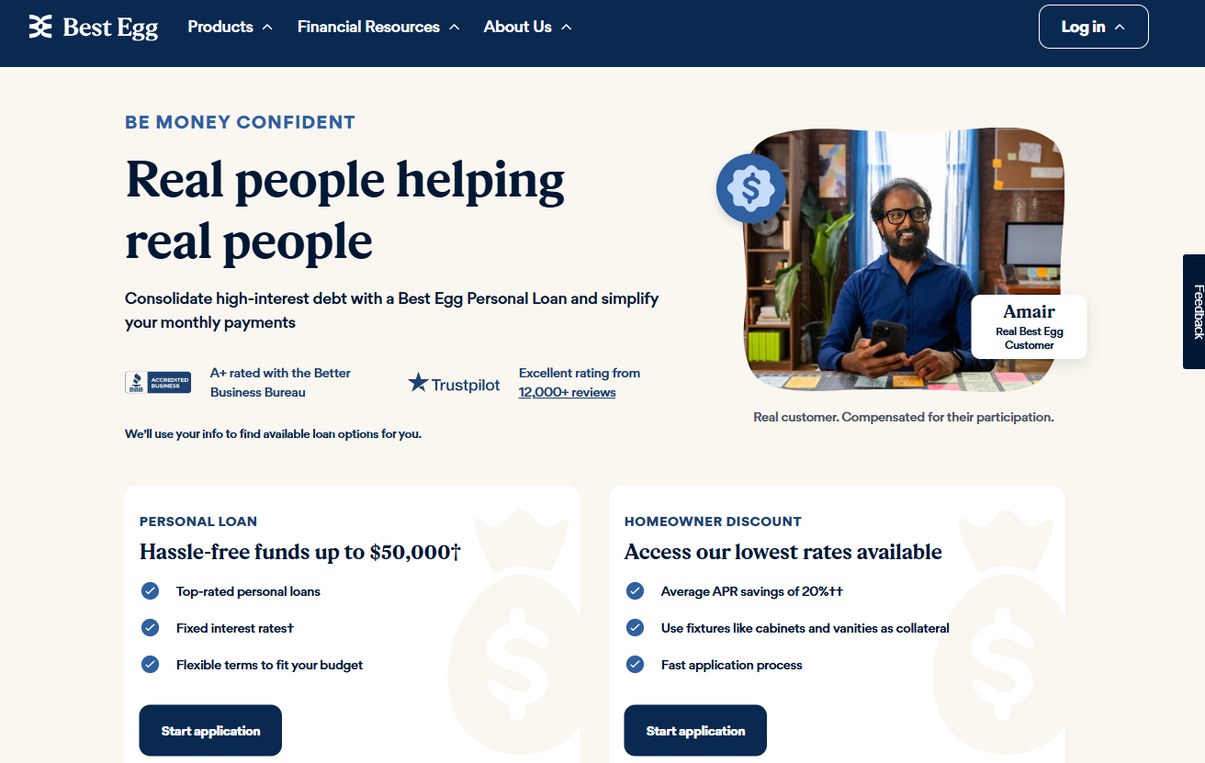
Best Egg is a titan in the personal finance arena, known for keeping things refreshingly simple. They specialize in helping people clean up their financial lives through structured loan products. Their main goal is often helping you consolidate mounting debt.
If you are drowning in high-interest credit card balances, a single loan from Best Egg can act as a life raft. By merging those various debts into one monthly installment, you can often enjoy a much lower APR. It turns a chaotic pile of bills into a single, predictable target.
One of their most clever strategies involves using household fixtures as collateral for your loan. Believe it or not, items like vanities or cabinets can serve as security. This unconventional route is a goldmine for homeowners needing extra capital without traditional equity hurdles.
It is a unique take on secured lending that treats your home’s interior as a tangible asset. This provides a streamlined path to borrowing against your home’s value without the massive headache of a full equity loan.
Pros:
- Loan amounts can reach up to $50,000.
- Potential to slash interest costs by 20% APR.
- Discounts available specifically for homeowners.
Cons:
- Approval and rates depend on specific eligibility rules.
3. OneMain Financial
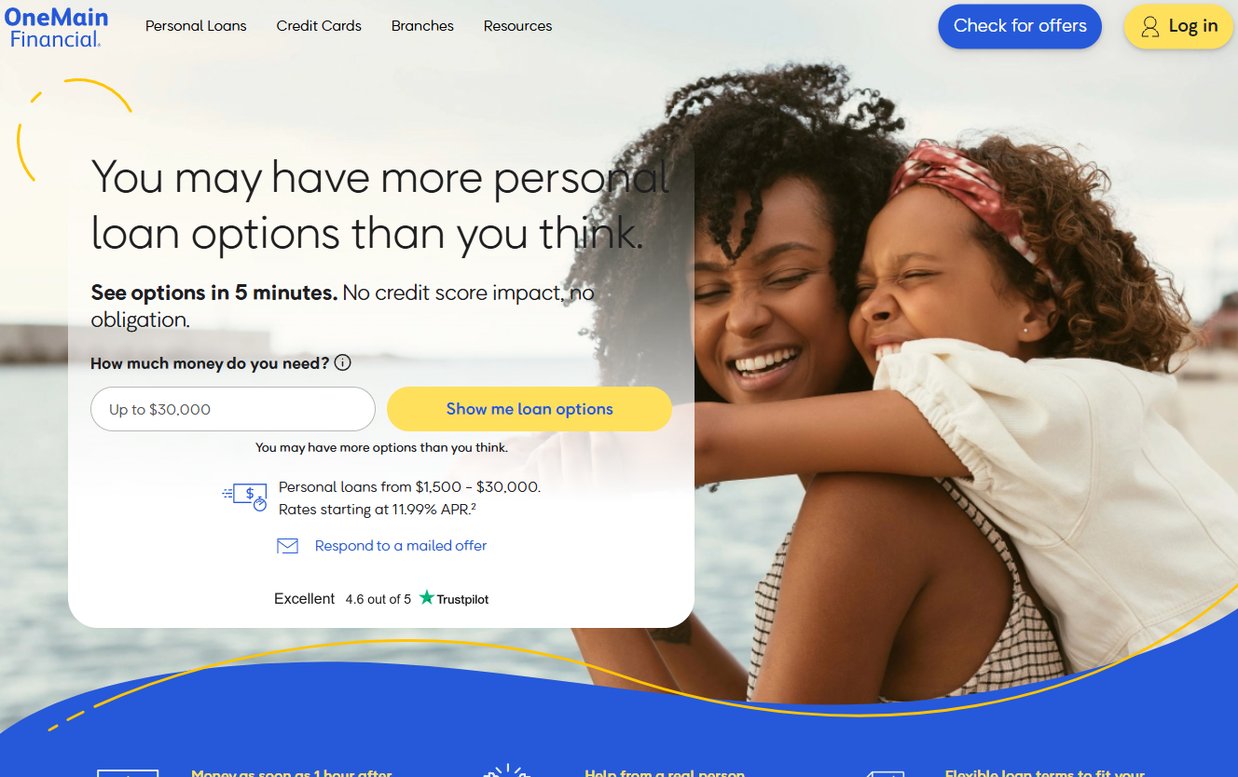
OneMain Financial strikes a perfect balance between modern tech and old-school service. With a massive network of over 1,300 branches, they offer a human connection that many digital-only firms simply can’t touch. They are a heavyweight for anyone who wants to look someone in the eye.
If you find yourself getting lost in a labyrinth of digital forms or document uploads, don’t sweat it. You can simply walk into a local branch and talk to a real person. This physical presence offers a sense of security and reliability that purely online fintech apps often miss.
They are a shining light for borrowers who might have a less-than-perfect credit history. You can gauge your loan options in a quick five-minute window without worrying about your score. It takes the mystery out of the lending process.
In an emergency—like a car repair that’s standing between you and your paycheck—they move incredibly fast. You can see funds hit your account just one hour after the paperwork is signed. That kind of speed is essential when you’re in a tight spot.
Pros:
- Lightning-fast funding, sometimes one hour after signing.
- Huge branch network for face-to-face assistance.
- Repayment terms ranging from 24 to 60 months.
Cons:
- Loan amounts are limited to a $30,000 ceiling.
4. Freedom First Credit Union
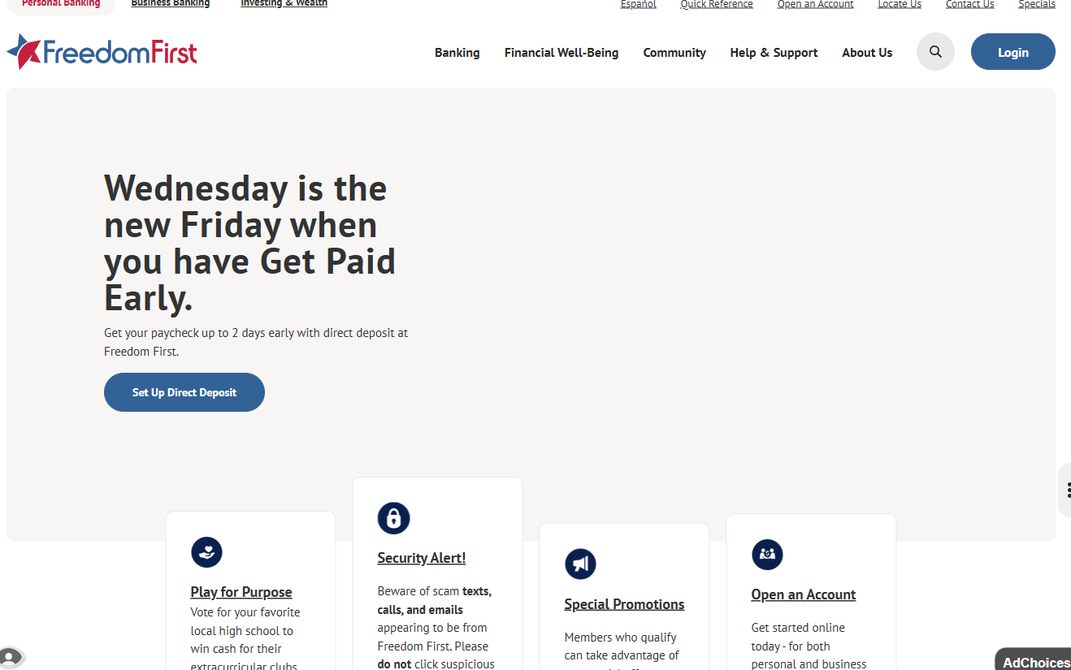
Freedom First Credit Union operates with a heart for the community, which sets them miles apart from the cold, massive banks. They specialize in secured personal loans where your own share accounts or certificates act as the collateral. It is a very localized approach to banking.
This method is a rock-solid way to grow your credit while accessing necessary capital. Since you are essentially borrowing against your own savings, the interest rates are usually much friendlier. The risk for the credit union is minimal, which makes the approval process a breeze.
They also offer some lovely perks, such as getting your paycheck up to two days early via direct deposit. Such features help you stay ahead of the game when managing your monthly cash flow. It allows you to sync your payments perfectly with your income.
For those who want their money to do more than just sit in a vault, their “Play for Purpose” initiatives are impressive. It shows they are truly invested in the local community, creating a cycle of mutual success for members and the institution.
Pros:
- Rooted in a community-first service model.
- Use share accounts as collateral for loans.
- Access to funds up to 2 days early.
Cons:
- Membership is likely restricted to certain eligibility criteria.
5. Balance Credit
Balance Credit serves a very specific niche, focusing on those who need smaller, rapid injections of cash. With a maximum loan limit of $4,000, they aren’t trying to compete with the massive lenders. Instead, they provide a specialized tool for quick liquidity.
Inclusivity is clearly their north star. They are willing to review applications even if your credit isn’t perfect. This makes them an essential resource for people who need a short-term boost but don’t require a massive, life-altering loan.
The speed of their operation is nothing short of impressive. You can expect the money to land in your account by the very next business day. Plus, they don’t punish you for being responsible; there are no penalties for paying your loan off early.
This can save you a mountain of interest if you come into unexpected cash. If you land a bonus or a tax refund, you can crush that debt instantly without facing the prepayment penalties common at larger banks. It is a very flexible arrangement.
Pros:
- No extra costs for paying off loans early.
- Open to applicants with various credit profiles.
- The application process is remarkably fast.
Cons:
- Loan amounts are capped at a relatively low $4,000.
6. Synchrony
Synchrony mostly lives within the ecosystem of marketplaces and specialized financing. They are frequently paired with specific retail brands rather than acting as a general-purpose lender. This makes them a highly targeted tool for specific shopping needs.
If you are looking to finance a major purchase through a partner store, Synchrony is often the main player. For instance, if you’re upgrading your kitchen with high-end appliances, they might offer interest-free promotional windows. It is a highly specialized way to manage big-ticket items.
Their suite of services is diverse, covering everything from credit cards to marketplace financing. While they might not be the first phone call for a general utility bill, their expertise in retail-specific credit is second to none. They excel when a purchase is already in your cart.
The integration into major retailer checkouts is incredibly seamless. It turns the transition from “just browsing” to “fully financed” into an almost instantaneous experience. It is a very smooth ride for consumers looking for very specific types of credit.
Pros:
- Excellent for financing specific retail purchases.
- Offers a wide variety of credit products.
- Backed by a large and established financial network.
Cons:
- Not designed for general-purpose personal borrowing.
Exploring Asset Classes and Associated Hazards
Before you sign on the dotted line for a secured loan, you must grasp the gravity of what you are pledging. Most collateral pieces fit into three distinct buckets: liquid holdings, tangible assets, or various financial tools. Every single one carries a different level of danger for your wallet.
Cash reserves, such as certificates of deposit or standard savings accounts, represent the most secure option for any bank. Because the lender faces minimal risk, you often reap the rewards of much lower interest rates. For example, pledging $5,000 held in a savings account could result in significantly cheaper borrowing costs.
However, there is a catch that feels like a heavy anchor. That $5,000 becomes essentially “off-limits” for your daily needs while the debt remains unpaid. You are effectively shrinking your emergency fund exactly when life might throw a curveball your way.
Pledging physical belongings, particularly your automobile, is a frequent choice for many borrowers. While this method can unlock much larger sums of credit, it brings a pesky issue known as “depreciation risk” to the table. A vehicle’s market value tends to melt away with every passing year.
Imagine you borrow $15,000 against a vehicle that is only worth $12,000 because the odometer has climbed too high. You find yourself “underwater,” meaning your debt outweighs the car’s actual price. This creates a mountain of trouble if you ever need to ditch the car or miss a payment.
Investing in stocks or bonds allows you to tap into massive credit lines, but these come with a wild ride. Market volatility is a fickle beast that can turn quickly. If the stock market takes a sudden nosedive, your lender might trigger a “margin call.”
In such a scenario, they might demand you cough up extra cash on the spot. Should your pockets come up empty, the bank can liquidate your portfolio at a loss to cover the gap. Navigating this requires a high level of financial savvy to avoid a total disaster.
Navigating the Path to Your Loan
Landing the right financing is a marathon, not a sprint. You don’t want to stumble into a financial minefield by rushing the process. Instead, approach your application with a roadmap in hand. This ensures you snag favorable terms while keeping your fiscal reputation intact.
Think of it like preparing for a long journey. If you pack incorrectly, you’ll regret it halfway through. By following a structured method, you can glide through the paperwork without any nasty surprises or hidden pitfalls catching you off guard.
The following checklist serves as your compass. It is designed to help you navigate the complexities of collateralized borrowing. Each phase is critical to ensuring the final contract works for you, rather than you working for the debt.
Phase 1: Inventory Your Collateral. Before you even knock on a lender’s door, take a hard look at what you own. List every asset you intend to pledge. Remember, the current market valuation is what matters, not what you originally paid at the store.
For cars, a quick check on Kelly Blue Book provides a realistic baseline. If you are using home features, calculate what it would cost to replace them today. Gather your ownership titles and recent bank statements so you aren’t scrambling later.
Phase 2: Gauge Your Credit Standing. You need a baseline before you dive into the deep end. Use a “soft pull” method, which won’t ding your credit score. Lenders such as OneMain Financial or JetzLoan offer these non-damaging inquiries.
Knowing your exact number is vital. It tells you whether you’ll qualify for those coveted “prime” interest rates or if you’ll be stuck with the pricier “subprime” offerings. This knowledge is your shield against unexpected denials during the formal application.
Phase 3: Prioritize the APR Over Interest Rates. It is a common trap to only look at the interest rate. While that covers the principal, the Annual Percentage Rate (APR) is the real storyteller. The APR accounts for all the sneaky points and extra fees.
Consider this scenario: a 5% interest rate bundled with $500 in upfront costs might actually cost you more than a 6% rate with no fees at all. To ensure an apples-to-apples comparison, always make the APR your primary metric for success.
Phase 4: Weigh Your Repayment Period. The length of your loan dictates your monthly lifestyle. Choosing a 60-month term, for instance, keeps your monthly obligations low and helps your immediate cash flow. However, this is a double-edged sword.
While your monthly burden is lighter, the total interest paid over time will climb significantly. You must calculate the “total cost of the loan” to see the true price tag. Don’t let low monthly numbers blind you to the long-term expense.
Phase 5: Scrutinize the Default Provisions. Never sign a contract without understanding the “remedies upon default” clause. You need to know exactly how many missed installments will trigger a formal default situation with your lender.
Additionally, investigate the required notice period before any collateral is seized. This “grace period” acts as your safety net. Understanding these fine details is the difference between a manageable loan and a complete financial catastrophe.
Navigating the Hazards of Secured Debt
Mistaking the gravity of your pledged assets is a massive blunder. By putting your vehicle or your nest egg on the line, you are essentially handing the bank a “get out of jail free” card for your property. It is a high-stakes gamble where the stakes are very real.
You must maintain a brutally honest perspective on your monthly cash flow. A frequent mental slip is believing that you can simply catch up on payments down the road. In the world of secured lending, the legal landscape is rarely as forgiving as your intuition suggests.
Scrutinize the specific clauses concerning payment failures. Not all institutions operate with the same level of leniency. One lender might come knocking for your car after just one slip-up, whereas another might be willing to sit down and negotiate a repayment schedule.
Keep a sharp eye on what this debt actually costs you in total. A tiny interest rate can be a deceptive siren song if the hidden costs are massive. Be wary of “origination fees” that get shaved off your initial principal.
You might walk away with $9,500 in your hand even if you officially signed for $10,000. Always do the math before you sign. Don’t let desperation drive you into a corner; taking a moment to shop around can protect you from losing a fortune.
Use “no credit impact” inquiries to vet your options safely. There is no need to rush into a bad deal just because you are feeling the squeeze. A little patience during the research phase can prevent a massive headache later on.